


Biocomposites: Stepping into the Future with the Miracles of Nature
Nowadays, sustainability and environmentally friendly technologies are becoming increasingly important. In this context, we often hear the name of biocomposites; these pioneering materials attract attention by minimising environmental impacts. Biocomposites are innovative materials derived from biological sources and have various properties that can replace traditional materials.What is a Biocomposite?
Biocomposites are materials created by combining polymers and fibres, usually of biological origin. These materials are combined with components derived from natural sources such as plant fibres, wood shavings, cork. The use of these materials allows them to leave a lower environmental impact compared to traditional materials.Natural Fibre Types
Various types of natural fibres are available for use as reinforcement in the development of biocomposites. Some natural fibres that give good results as reinforcement in polymer matrix composites are pineapple leaf fibre, bamboo, jowar, banana, jute, hemp, flax, sisal, etc. Natural fibres can be classified as follows:- Cane Fibres: These fibres are produced from wheat, corn and rice.
- Leaf Fibres: Abaca, sisal and pineapple leaf fibres.
- Bast Fibres: Jute, flax, hemp, ramie and kenaf are examples of bast fibres.
- Seed Fibres: These include coir, cotton and kapok.
- Core Fibres: Kenaf, hemp and jute are examples of these fibres.
- All other species: Includes wood and roots. Due to its low density compared to other natural fibres, Jowar fibre can be widely used in the production of lightweight materials for the housing sector, car body construction and packaging industry, etc.
Mechanical properties
The chemical composition of natural fibre affects the properties of natural fibre reinforced composites. The cellulose content in natural fibres determines the mechanical properties of these fibres. The amount of hemicellulose and lignin also affects the properties of natural fibres. High amounts of hemicellulose and lignin in natural fibres are not desirable as they lead to high moisture absorption and biological degradation of the fibre. To develop composites with good mechanical properties, natural fibres with high cellulose content and low hemicellulose and lignin content should be used. Physical properties such as the length and diameter of the natural fibre also affect the mechanical properties of the composite. Small diameter natural fibres have a more positive effect on mechanical properties than large diameter fibres.Advantages
-
Sustainability
-
Lightness and Durability
-
Recyclability
Disadvantages
Nevertheless, there are some problems in the development of these composites. The hydrophilic nature of natural fibres reduces the application of natural fibres as reinforcement in polymer composites. This is due to the lower moisture resistance and poor wettability of natural fibres, which reduces the bonding between matrix and reinforcement. This leads to the development of composites with poor mechanical properties. To overcome this, composites can be chemically treated. Natural fibres also have a tendency to form aggregates, which has a negative effect during the production of composites. Less dimensional stability is also a disadvantage of natural fibre reinforced composites. The thermal stability of natural fibres limits to some extent their use as reinforcement in composites. However, the low strength of biofibres compared to carbon and glass fibres can also be considered as a disadvantage.Application Areas
Biocomposites can be used in many different industries. They are used in areas such as packaging materials, automotive industry, construction materials and textiles. The increasing demand for biocomposite-based products may enable these materials to have a wider range of uses in the future.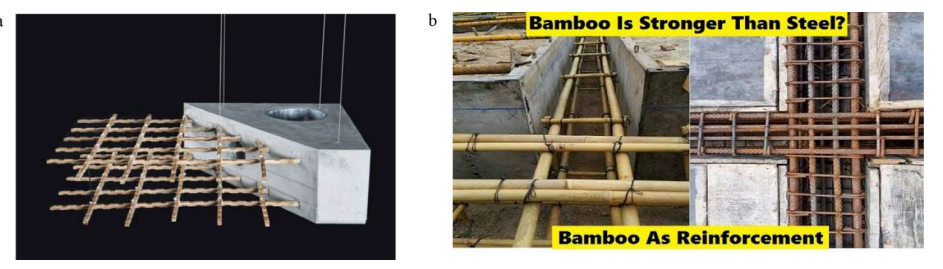
Biocomposites may gain more importance in the future as environmentally friendly and sustainable material options. With research and development studies, the properties and cost-effectiveness of these materials can be further improved, thus increasing their industrial use.
